Planning around 26-week long-lead turbine spares

If a part takes half a year to arrive, then the ordering decision belongs in the previous outage — not in the one where it is needed.
Long-lead planning is not a purchasing problem, it is an information problem. The parts that hurt are not the ones with famous lead times; they are the ones nobody checked, because everyone assumed the warehouse had one.
Classify by consequence, not by price
- Critical, single-source, over 16 weeks: hold a spare on site or place a standing order with a date already reserved on the supplier's line
- Critical, dual-source, 6–16 weeks: keep the supplier relationship warm and pre-agree the exchange price
- Non-critical: buy on failure and accept the downtime, which is usually measured in hours
A part's price is a poor proxy for its urgency. A turbine-side seal ring costing a few thousand dollars can hold a 200 MW unit offline for a fortnight, while a multi-million-dollar rotor forging is normally planned years ahead.
The reservation trick
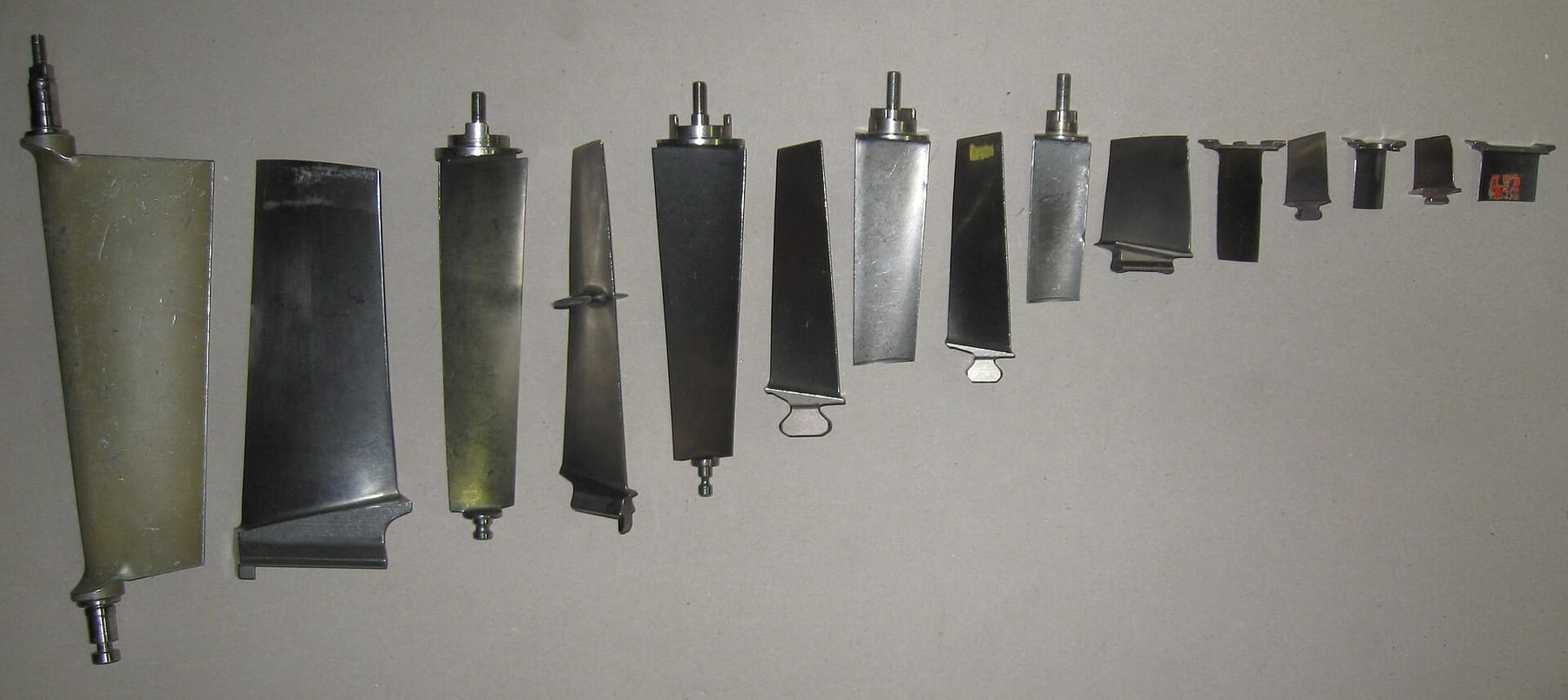
For hot-section hardware, ask a qualified supplier to reserve production capacity rather than stock. A named slot on a machining schedule, tied to a future outage date and releaseable on 30 days' notice, costs a fraction of carrying the finished part — and it survives the schedule shifts that every outage programme experiences.
Build the horizon into the outage calendar
| Horizon | Action |
|---|---|
| Next 3 months | consume reserved slots, confirm shipping documents |
| 3–12 months | reserve capacity, freeze drawing revisions |
| 1–3 years | frame-level spares strategy, budget for hot-section set |
| 3+ years | life-extension decisions, rotor and casing replacement planning |
We stopped asking how long a part takes and started asking when the supplier's line is next free. The answer changed our calendar, not our budget.
Head of maintenance, 1,200 MW portfolio
The output of all this is a single sheet: every critical part, its actual measured lead time from the last three purchases, and the latest date it can be ordered to land before the next planned outage. Once that sheet exists, the rest of the outage programme becomes scheduling rather than improvisation.
- Lead time
- Inventory
- Planning